Signs and Symptoms of an Impending Heart Attack Everyone Should Know
Every 40 seconds, someone in the United States has a heart attack. Many of those events are survivable — but only if the warning signs are recognized and acted on quickly. The problem is that myocardial infarction doesn't always announce itself the way movies suggest. No clutching the chest and collapsing dramatically. Sometimes it's a vague ache in the jaw, a wave of nausea, or an exhaustion that won't quit.
Knowing what to look for — and taking it seriously — can be the difference between a full recovery and a fatal outcome. This guide covers every major warning sign, including the ones that are easy to brush off.
Important: This article is for informational purposes only and does not constitute medical advice. If you believe you or someone near you is having a heart attack, call emergency services immediately.
What Happens in the Body Before a Heart Attack
A heart attack begins when blood flow through a coronary artery is severely reduced or completely blocked. In most cases, coronary artery disease has been developing for years — fatty plaques building up inside the artery walls. When one of those plaques ruptures, a blood clot forms rapidly at the site, cutting off oxygen to the heart muscle.
The heart muscle downstream from the blockage begins to die within minutes. That's why the timeline matters so much. Every minute without treatment means more muscle damage, and more damage means a harder road to recovery — or no recovery at all.
What makes this process particularly dangerous is that it's often silent for a long time. The buildup of arterial plaque rarely causes noticeable symptoms until a blockage becomes critical. By the time the body sends distress signals, the situation is already urgent.
The Classic Warning Signs Most People Recognize
Chest pain or chest pressure is the most recognized symptom of a heart attack — and for good reason. It's the most common signal the body sends when the heart muscle is starved of oxygen.
People describe the sensation in different ways: a heavy weight on the chest, a squeezing tightness, a burning feeling, or a dull ache that won't go away. It typically lasts more than a few minutes or comes and goes in waves. This is distinct from the brief, sharp pain of a muscle strain, which usually resolves quickly with a change in position.
Chest discomfort that resembles angina — pain triggered by physical exertion or stress — should always be taken seriously. Stable angina usually eases with rest; pain that persists at rest or intensifies is a red flag.
Radiating pain is another hallmark. The discomfort can travel from the chest into the left arm, both arms, the jaw, neck, or upper back. This happens because the heart and these areas share nerve pathways, so the brain sometimes misinterprets the source of the pain signal.
Lesser-Known Symptoms That Are Easy to Dismiss
Many heart attacks don't lead with chest pain at all. Some of the most dangerous warning signs are the ones that feel like ordinary problems — which is exactly why they get ignored.
- Shortness of breath (dyspnea) — Feeling winded without exertion, especially when lying down, can signal that the heart is struggling to pump effectively.
- Nausea and cold sweats — A sudden wave of nausea, sometimes accompanied by vomiting and clammy skin, is a classic but underappreciated sign.
- Jaw or back pain — Pain in the lower jaw, upper back, or between the shoulder blades is frequently mistaken for a dental problem or muscle tension.
- Lightheadedness or dizziness — A sudden feeling of faintness, particularly combined with chest discomfort, warrants immediate attention.
- Unexplained fatigue — A crushing tiredness that comes on suddenly and doesn't match your activity level can be the heart signaling distress.
The combination of symptoms matters as much as any individual sign. Nausea alone isn't alarming. Nausea plus cold sweats plus shortness of breath is a medical emergency.
How Heart Attack Symptoms Differ in Women
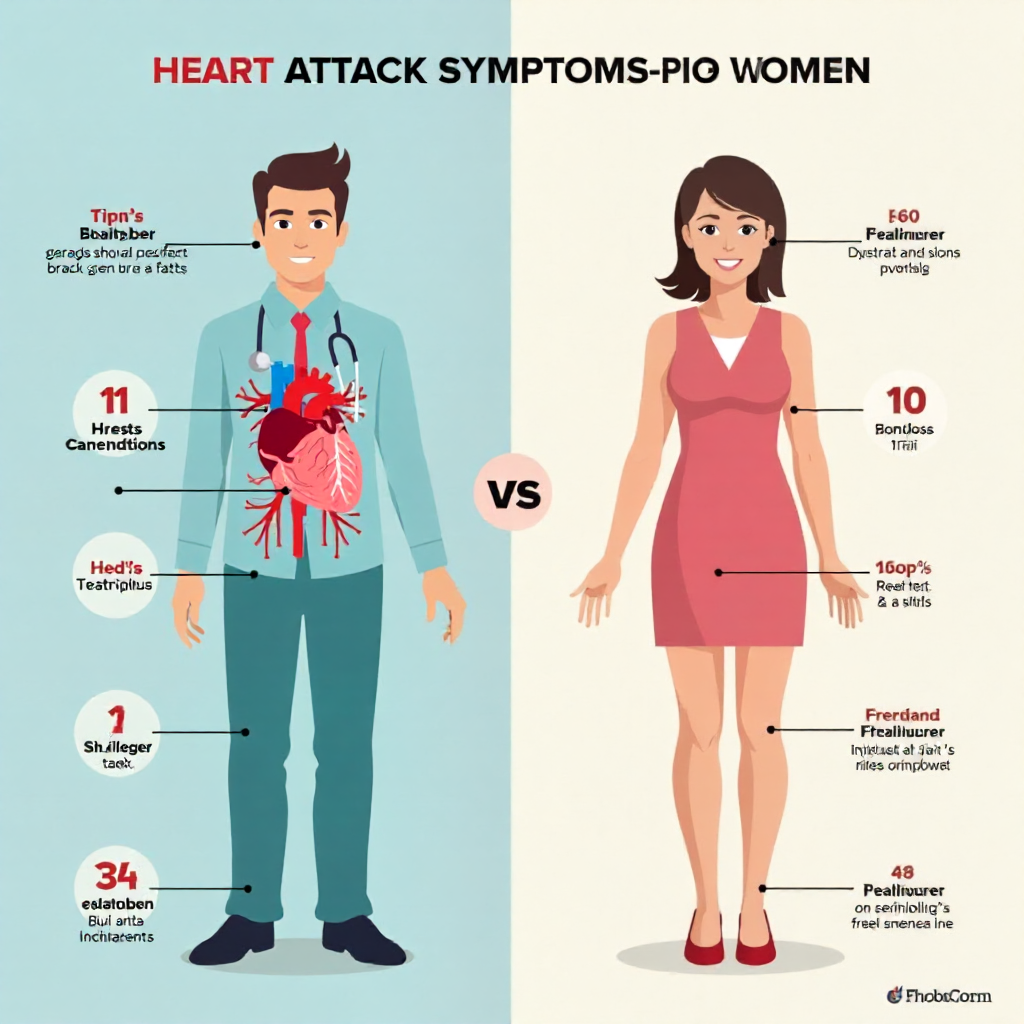
Women are significantly more likely than men to experience heart attacks without classic chest pain — and this gap in symptom presentation has historically led to delayed diagnosis and worse outcomes.
Research published through the National Heart, Lung, and Blood Institute confirms that women more commonly report symptoms like extreme fatigue, sleep disturbances, shortness of breath, nausea, and pain in the jaw, neck, or back — sometimes without any chest discomfort at all.
This doesn't mean chest pain is rare in women — it's still the most common symptom. But the atypical presentations occur at a higher rate, and women are more likely to attribute their symptoms to stress, indigestion, or anxiety. That tendency to rationalize away the warning signs is a documented factor in delayed treatment.
Any woman experiencing an unusual combination of fatigue, shortness of breath, and upper-body discomfort — even without chest pressure — should treat it as a potential cardiac event and call for help.
Early Warning Signs That May Appear Days Before
Prodromal symptoms — early warning signs that precede a heart attack by hours or even days — are reported by a significant portion of patients, yet rarely get the attention they deserve.
Studies suggest that up to 50% of heart attack patients experienced some form of prodromal symptom in the days leading up to the event. These early signals include:
- Unusual or persistent fatigue not explained by activity or poor sleep
- Disrupted sleep patterns or waking up feeling unwell
- A vague sense of anxiety or "something is wrong" without a clear cause
- Mild chest discomfort that comes and goes, especially with exertion
- Indigestion-like symptoms that don't respond to antacids
None of these symptoms alone will confirm an impending heart attack. But if you or someone you know has known risk factors — hypertension, diabetes, a history of smoking, or obesity — and starts experiencing a cluster of these signs, that combination deserves a medical evaluation, not a wait-and-see approach.
What To Do If You or Someone Else Shows These Signs
If you suspect a heart attack, call 911 (or your local emergency number) immediately. Do not drive yourself to the hospital. Emergency responders can begin treatment en route and alert the hospital so a cardiac team is ready on arrival — this coordination saves lives.
While waiting for help:
- Sit or lie down in a comfortable position — don't exert yourself
- Loosen any tight clothing around the chest or neck
- If the person is conscious and not allergic, and you have been previously advised by a doctor, chewing a regular aspirin (325 mg) or a low-dose aspirin (81 mg) may help slow clot formation — but do not delay calling 911 to find aspirin
- If the person becomes unresponsive and stops breathing normally, begin CPR if you're trained to do so
- Stay calm and keep the person calm — anxiety increases the heart's oxygen demand
One common mistake: people wait to see if symptoms improve before calling for help. With a heart attack, time is muscle. The faster treatment begins, the more heart tissue can be saved.
Risk Factors That Raise Your Likelihood of a Heart Attack
Symptom awareness is more urgent for people who already carry elevated risk. Understanding your personal risk profile isn't about fear — it's about calibrating how seriously to take warning signs when they appear.
Modifiable risk factors include:
- Hypertension — High blood pressure damages artery walls over time, accelerating plaque buildup
- Diabetes — Elevated blood sugar contributes to arterial inflammation and coronary artery disease
- Smoking — Tobacco use narrows blood vessels and dramatically increases clot risk
- Obesity — Excess body weight strains the heart and raises blood pressure, cholesterol, and diabetes risk simultaneously
- Physical inactivity and chronic stress also contribute meaningfully
Non-modifiable factors include age (risk rises significantly after 45 for men and 55 for women), family history of heart disease, and prior cardiac events.
If you have multiple risk factors, talk to your doctor about a proactive monitoring plan. Managing blood pressure, blood sugar, and cholesterol reduces the likelihood of a cardiac event — and if symptoms do appear, knowing your risk level means you're less likely to dismiss them.
Frequently Asked Questions
Can a heart attack happen without chest pain?
Yes. A "silent" myocardial infarction — one with no chest pain at all — accounts for roughly 45% of all heart attacks according to some estimates. Silent heart attacks are more common in people with diabetes and in women. They may present only as fatigue, shortness of breath, or mild discomfort, or they may be discovered after the fact through an electrocardiogram.
How long do warning signs last before a heart attack?
It varies widely. Some people experience prodromal symptoms for days or weeks before an event. Others have only minutes of warning — or none at all. Chest pain that lasts more than 5 minutes without a clear cause should prompt an immediate call to emergency services, regardless of severity.
Is jaw or shoulder pain always a sign of a heart attack?
No — jaw pain more often has a dental cause, and shoulder pain is usually musculoskeletal. But when jaw, shoulder, or arm pain occurs alongside other symptoms (chest pressure, shortness of breath, cold sweats), the combination points strongly toward a cardiac event. Context and symptom clusters matter more than any single symptom.
What is the difference between a heart attack and a cardiac arrest?
A heart attack is a circulation problem — a blocked artery cuts off blood flow to part of the heart muscle. The heart typically keeps beating. Cardiac arrest is an electrical problem — the heart's rhythm becomes so chaotic that it stops pumping effectively. A heart attack can trigger cardiac arrest, but they are distinct events. Cardiac arrest requires immediate CPR and defibrillation; a heart attack requires emergency medical treatment to restore blood flow.
Should I go to the ER or call 911 if I think I'm having a heart attack?
Call 911. Driving yourself or being driven to the ER wastes critical time and bypasses the pre-hospital treatment that paramedics can provide. Emergency responders can administer oxygen, monitor heart rhythm, and alert the receiving hospital so that a cardiac catheterization team is prepared before you arrive. That preparation can reduce treatment time by 30 minutes or more — a difference that directly affects survival and recovery.